
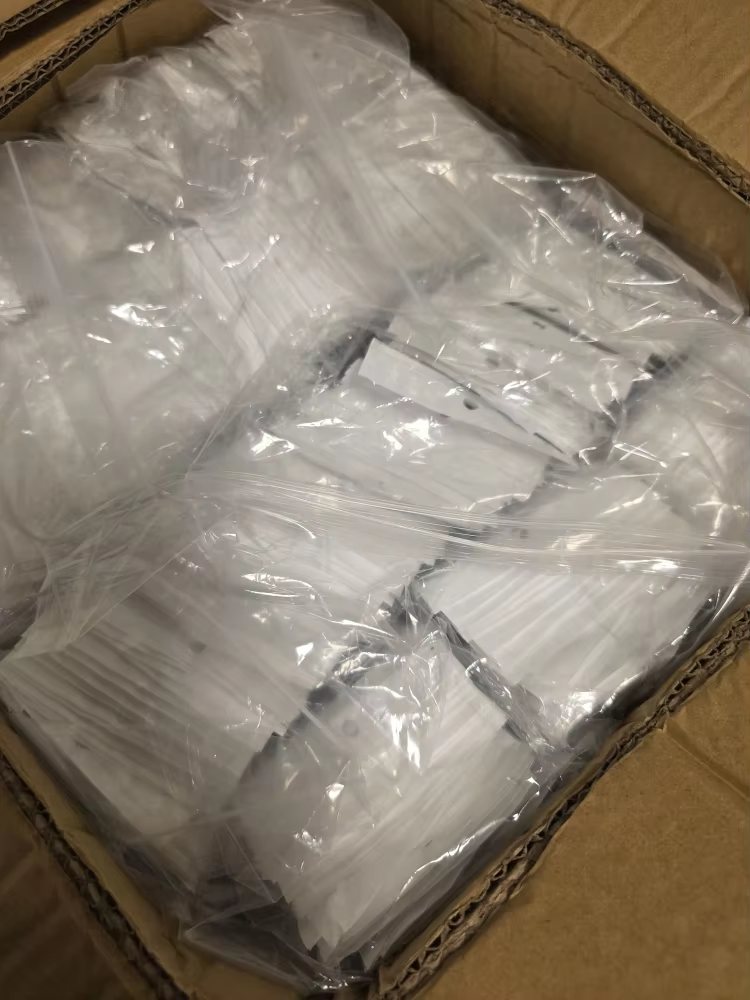
Sellers on Amazon, eBay, Shopify and local marketplaces usually order differently from importers: they want a small batch, no retail price printed anywhere, and the unit labelled the way the platform demands.
What marketplace sellers need that retailers do not
- A per-unit barcode. Marketplaces assign their own code (an FNSKU on Amazon), which must be applied to every single unit — not to the carton.
- No price on the packaging. Retail boxes printed with a price cannot be sold as new on most platforms.
- Poly bags with a suffocation warning. If you sell the holder in a bag rather than a box, marketplaces typically require a warning printed on the bag or on a label when the opening is large enough for a child's head.
- A plain first order. Level 2 packaging — a neutral box with your printed label — keeps the first order cheap and still looks finished to the customer.
Why accessories get rejected at the warehouse
Most rejections are not about the product. They are about identification: a missing FNSKU, two units sharing one barcode, a label placed over the box opening, or a carton whose label does not match its contents. All four are avoidable at the factory.
So give the packaging instructions in writing before production, not after the goods are packed. Changing labels after packing means repacking, and repacking is billed by the hour.
How to structure a first order
- Pick two or three models rather than ten. Our 21 models all start at 50 pcs, so a three-model test is a few hundred units, not a container.
- Order the sample first (7–10 working days from confirmed artwork) and list it on the marketplace before committing to the batch.
- Keep the first packaging plain: a neutral box with your label and the platform barcode.
- Ask for the carton dimensions and units per carton — you will need them for freight and for the warehouse receiving plan.
What we need from you to print labels
- The barcode as a vector file, or the number so we can generate and verify it.
- Where the label goes on the unit and on the carton, with a sample photo or drawing.
- Whether the units ship in poly bags, and the warning text your marketplace requires.
- Country of origin and importer details if your market requires them on the packaging.
Paperwork for the first import
Three things are worth settling with your freight forwarder before production ends: the HS code your broker will use, who is the importer of record, and whether your market requires the country of origin marked on the product or the packaging. These are your broker's calls, not ours — but we can print whatever they specify, and we can provide the packing list and commercial invoice data they ask for.
The short version
Tell the factory three things at the start: plain packaging, one barcode per unit, small first batch. Send the barcode as a vector, confirm the carton count, and order the sample before the batch.
Need a price for your own model?
Send us your drawing or a reference photo. You will get unit price, sampling time and shipping cost within one working day.
Models mentioned in this guide