
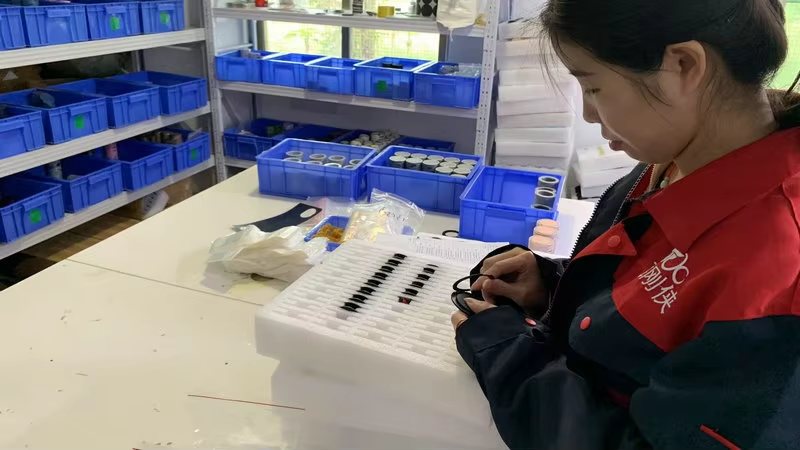
Direct answer: Review a custom phone grip manufacturer’s corrective action report by checking five things: containment of the bad lot, the root cause, the corrective action, verification that the fix worked, and closure evidence. A report that only says “we will pay more attention” is not a corrective action.
1. Start with the affected lot
The report must identify the model, product revision, defect, affected quantity, date and reference sample. The defect description should distinguish a functional failure, appearance defect, dimensional issue, logo error or packaging problem. A generic report cannot close a specific batch.
Ask for photos of the affected units and the approved sample. Match those records before reading the proposed cause. If the report discusses a different model, colour or packing revision, stop and ask for a new report.
2. Require containment
Containment should stop defective products from reaching customers:
- quarantine the affected lot and identify its quantity;
- inspect remaining stock and work in process;
- replace, rework or sort the affected units;
- record the disposition and owner;
- notify the buyer before the affected stock ships.
If the supplier cannot state how many units were checked, containment is incomplete. A promise to inspect future production does not address the existing lot.
3. Evaluate the root cause
The root cause should explain both why the defect happened and why inspection did not catch it. “Worker error” is usually incomplete. Ask which material batch, tool, machine, work instruction or inspection step was involved. Check whether the approved sample and production specification were the same.
The report should link the cause to evidence. A magnet-force issue may require a pull test, while a hinge problem may require movement and cycle checks. Colour, logo and packaging failures need their own approved references and inspection records. Use the <a href="../quality">quality-control process</a> as the review framework.
4. Require a specific correction
The correction is the change made to prevent recurrence. It may involve a revised work instruction, tool repair, material control, inspection method or packaging procedure. The action needs an owner and completion date.
“More training” is not enough unless the training topic, attendees and resulting inspection check are recorded. If the root cause is uncertain, the report should say what additional investigation will be completed rather than presenting a guess as closure.
5. Verify effectiveness
Verification must show that the correction worked. Ask for the sample size, inspection method and result from the corrected lot. Useful evidence can include first-article inspection, dimensional measurement, magnet-force testing, hinge movement checks, colour comparison, barcode checks and final packing inspection.
The <a href="../blog/magnetic-phone-holder-sample-approval">sample approval checklist</a> provides a useful baseline for connecting the approved sample to production checks. A report marked “fixed” without a sample size or result is not closed.
6. Close the report with controlled records
Closure should record the responsible person, completion date, verification evidence and buyer acceptance. If the correction changes the product specification, packaging artwork or inspection plan, the controlled revision should be updated and communicated. A new golden sample may be required.
Do not accept a report that closes before the buyer has reviewed the evidence. Keep the affected lot, root-cause record and verification result together so the next audit can trace the decision.
7. Put corrective action into the supplier review
Use corrective-action evidence together with the product specification, change record and inspection plan. Do not treat the report as proof of unrelated certifications. Our <a href="../facts">published facts</a> separate product data from documents we do not hold.
For a ready-molded phone grip, MOQ is 50 pcs per model. Samples take 7–10 working days after requirements are confirmed; production takes 7–12 days after sample approval, followed by 3–5 days for packing and final inspection, FOB Shenzhen. Send the model, defect evidence and affected quantity before asking for the next shipment.
Need a price for your own model?
Send us your drawing or a reference photo. You will get unit price, sampling time and shipping cost within one working day.
Frequently asked questions
Does every defect need a corrective action report?
Not every minor issue, but repeated defects, functional failures, wrong logos, colour problems and packaging failures should have written corrective action.
What containment evidence should a buyer require?
Require the affected lot, inspection quantity, quarantine record, stock and work-in-process checks, disposition, and buyer notification before shipment.
What makes root-cause analysis complete?
It explains how the defect occurred and why inspection missed it, and links the cause to material, tooling, process or inspection evidence.
What should verification include?
Include the corrected sample, sample size, inspection method, result and the controlled change that addressed the root cause.
What are the MOQ and lead times?
Ready-molded models start at 50 pcs per model. Samples take 7–10 working days after requirements are confirmed; production takes 7–12 days after sample approval, followed by 3–5 days for packing and final inspection, FOB Shenzhen.
Models mentioned in this guide