
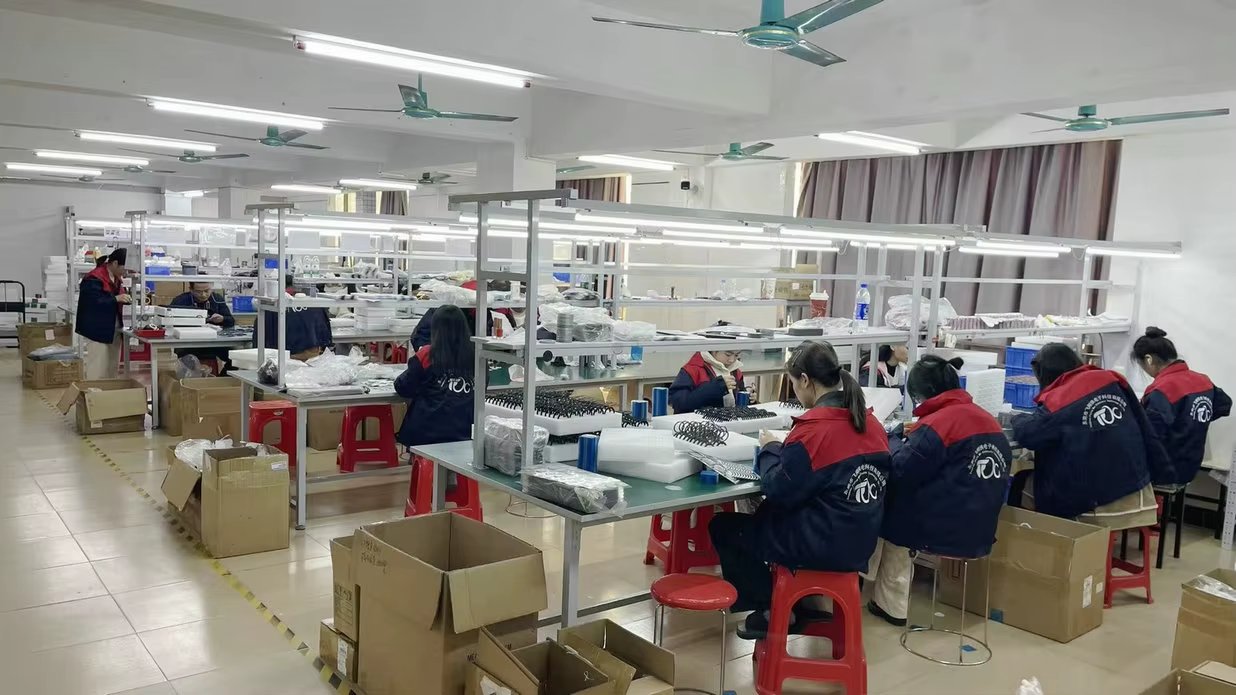
China has excellent factories and a large number of traders pretending to be factories. The difference matters: a trader adds margin and loses control of quality and lead time. Six questions separate the two.
1. How many molds do you own, and can I see the mold shop?
A factory owns tooling and can show it. Ask for a live video call walking through the mold store — not a photo. A trader will deflect, offer a showroom visit instead, or send stock images.
2. Which machine does my part run on, and what is its tonnage?
This question is hard to answer without owning the machines. If the answer is specific — injection machine model and tonnage, or the CNC and the fixture used — you are talking to production. If it is vague, you are talking to sales.
3. Can you send a video of my batch being tested, not a staged demo?
A factory can film the actual batch on the line: the magnet test, the hinge cycles, the final inspection. Ask for the video before you pay the balance. It costs them ten minutes and tells you more than any certificate.
4. What are the measured numbers, not the adjectives?
Ask for measured magnet strength, the material grade, the wall thickness, the cycle count on the hinge. Our standard ring models use N52 magnets measured at about 4,100 GS and an SK7 hinge cycle tested beyond 6,000 open-close movements — those are the kind of figures a factory can quote from its own test records.
5. Which certifications do you actually hold?
There is no shame in holding none. The problem is claiming certificates you cannot produce. Ask for the certificate number and the issuing body, then verify it. A supplier who says “we arrange CE or RoHS testing as part of the order” is being honest; one who sends a certificate that does not match the product is not.
6. Who answers when something goes wrong?
Before you order, ask: if 3% of the batch is defective, what happens? The answer should be a process — photo evidence, replacement in the next shipment, or a credit note — not a promise. Ask this early; how a supplier handles a hypothetical complaint tells you how they will handle a real one.
Red flags worth taking seriously
- A price far below every other quote, with no explanation of how.
- No video call, ever — only text and photos.
- Refusal to put the material grade and measured specs in writing.
- Payment requested only to a personal account with no company name.
- A “factory tour” that turns out to be a showroom in a different city.
The short version
Ask six questions: molds, machines, batch video, measured numbers, real certificates, complaint process. A factory answers them in ten minutes. A trader changes the subject.
Need a price for your own model?
Send us your drawing or a reference photo. You will get unit price, sampling time and shipping cost within one working day.
Frequently asked questions
How can I confirm a Chinese supplier is a real factory?
Ask for the business licence number, the plant address and a walkthrough video of the line, then start with a paid sample before a bulk order.
What are your licence and patent details?
Dongguan Feigangxia Electronic Technology Co., Ltd., business licence 91441900MACT5JA59W, and eight granted CNIPA patents on rotating, folding and pressure-relief mechanisms.
Should a first order start with a sample?
Yes. Samples take 7-10 working days from a confirmed drawing, and we quote the sample cost and freight together with the unit price.
What should we check in the sample?
Magnet strength on the assembled product, hinge tension, the adhesive face and the anodised finish, plus a one-minute one-hand use test on the case you sell.
Models mentioned in this guide